News and Events
Lecture by Randy Kritkausky at the University of Vienna, June 2024
"Indigenous Vision for a Pathway to 30 x 30" Statement on biodiversity, written for the Vermont Conservation Strategy Initiative,May 2024
Questioning the "Anthropocene" Designation: Open Letter to the Anthropocene Working Group of the International Commission on Stratigraphy, July 2023

ECOLOGIA’s Work:
Bridging the Global-Local Gap
Since 1989, ECOLOGIA has brought international perspectives and resources to local sustainable development projects, and brought locally based ‘on the ground’ experience to the world of international decision making, policy formulation, and action.
We recognize that local leaders, and their unique knowledge, have too often been marginalized in local, national and global deliberations. We work to help articulate local and Indigenous perspectives, and develop ways to more directly and meaningfully involve these leaders.
ECOLOGIA works with innovative leaders in dynamic, fluid situations - often before trends are dominant or even clear to others.
ECOLOGIA works by creating direct people-to-people connections. By linking individuals to one another, we foster the emergence of a global civil society — a worldwide network of individuals and organizations sharing common interests, information and resources.
Global Social Responsibility -ECOLOGIA's work Stakeholders Global Network for ISO 26000 SR
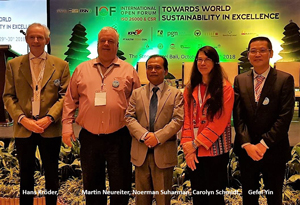
SGN Officers, 2018-2022
Humanitarian Aid and Disaster Relief - the Roles of NGOs Presentations from Japan, India and Benin. SGN Zoom event, October 2023
"Building Global Connections
to Create Civil Society
and Support Environmental, Social and Economic Sustainability"
|
|
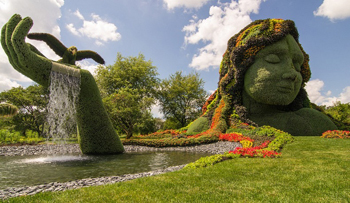
Mother Earth Mosaiculture, Montreal Botanical Garden, 2013. With its plaque erroneously attributing words to Chief Seattle, the beautiful image epitomizes how easily the culture of Indigenous people is appropriated. It is also a monument to the aspiration of re-inventing ourselves in the spirit of Indigenous wisdom.
We invite you to cross this threshold of awareness with us, at the intersection of Native American, Indigenous perspectives and present-day realities. See our Indigenous Perspectives resources here.
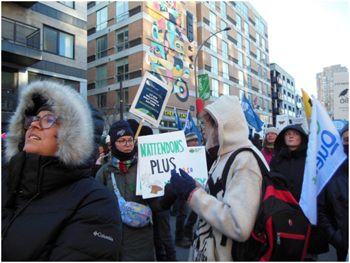
ECOLOGIA's Randy Kritkausky, at the march in support of Biodiversity and Indigenous Peoples Rights at COP 15, Montreal, December 10, 2022
NOTE: After decades of international grassroots and science-focused work on the environment, a few years ago we at ECOLOGIA recognized that something was missing from our approach. Going forward, our actions need to be grounded in solid spiritual foundations and wisdom, as well as scientific information. Our Indigenous Perspectives work is our contribution toward that goal.
ECOLOGIA's Handbook for Implementers of ISO 26000
ECOLOGIA's Handbook is designed for small and medium sized businesses, but useful for anyone seeking to use ISO 26000, or just to learn more about this unique voluntary global guidance standard for social responsibility. Open source through a Creative Commons license.
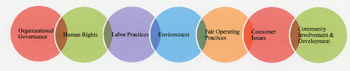
The 33-page Handbook features:
- Explanations of the goals and value of ISO 26000
- Workbook - with worksheets, tables, graphics, questions and examples
- Definitions, principles and action suggestions of the seven core subjects (summary)
|

